Planning a used car purchase in Autauga County should feel confident, not confusing. This local market research guide for Autauga AL brings together practical insights on pricing, availability, ownership costs, and model demand around Prattville, Millbrook, and Autaugaville. Whether you are after a fuel efficient compact, a family SUV, or a work ready truck, you will find clear steps to compare options, verify condition, and budget wisely.
Use this page to learn what influences prices, how mileage and trim levels affect value, and when selection in Central Alabama tends to be strongest. Cross check real world examples with our sold trends, then browse current options in used-inventory to see how these insights show up on the lot. When you are ready to go deeper, explore regional comparisons, financing education, and trusted ownership tips that fit commuting and weekend life in Autauga County.
Our goal is to simplify research so that every test drive starts with clarity. Below you will find local pricing drivers, condition evaluation checklists, and seasonal timing tips specific to Autauga AL. Compare neighboring counties, study recent sales snapshots in sold-inventory, and use our blog tutorials to turn research into results. Transparent, local, and practical.
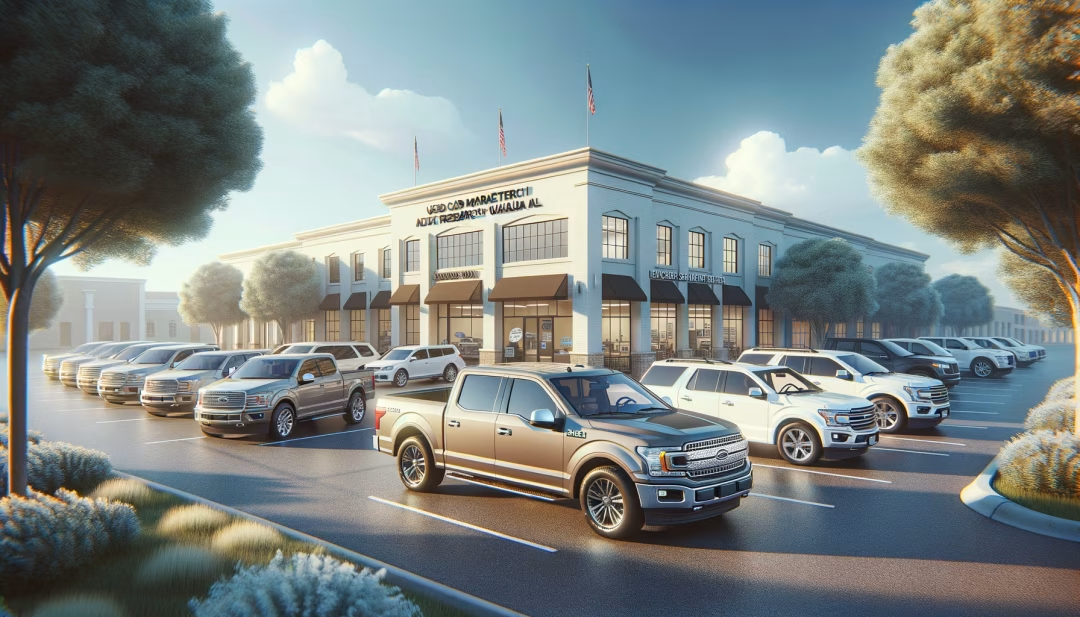
Autauga County shoppers balance day to day commuting into Montgomery with weekend travel across Central Alabama. That mix keeps demand steady for reliable midsize sedans, compact SUVs for families and students, and light duty pickups for work and recreation. Inventory turns faster on well maintained vehicles with documented service, clean history, and sensible mileage. Shoppers who arrive with local price expectations, a short list of target trims, and a simple inspection routine tend to make quicker, more confident decisions.
No single number sets used car value. In Autauga AL, price typically reflects availability, condition, and how well a vehicle matches county driving patterns. These quick checks help you estimate a fair range before you ever step onto a lot.
Commuters heading toward Montgomery often prioritize fuel economy and driver comfort, while local contractors and outdoor enthusiasts favor dependable trucks with good towing and cargo capacity. Because the mix is diverse, shoppers benefit from a clearly defined shortlist. Decide on your must haves, nice to haves, and deal breakers before you browse. That way you can compare similar vehicles fast and avoid stretching your budget for features that do not fit your daily needs.
Reviewing sold-inventory is a smart way to anchor expectations. Look for patterns by body style, mileage band, model year range, and condition comments. If trucks with clean histories and under 120,000 miles tend to move faster, you know to act decisively when you see a strong candidate. If certain trims linger, it can hint at negotiation room for features the local market values less.
Selection often broadens when trade ins arrive after tax refund season and again as families upgrade before the school year. If you are flexible, browse weekly and be prepared to schedule a same day look when a match appears. In a balanced market, fair priced vehicles with verified maintenance can sell within days.
Bring a simple system to each inspection. You do not need advanced tools to spot red flags. Use this repeatable list and take photos or notes as you go.
Local buyers often draw lines around round mileage bands. For example, under 60,000 miles may attract those seeking longer factory warranty coverage. Between 60,000 and 100,000 miles can be a sweet spot for balanced price and remaining life if maintenance is documented. Beyond 100,000 miles, strong service history, recent major maintenance, and ownership records can matter more than the number alone. In all cases, verify how the vehicle was driven and serviced rather than assuming a fixed price jump at an arbitrary milestone.
Compact and midsize SUVs remain top choices for families and student drivers. Half ton pickups hold demand for utility and weekend towing, especially when equipped with practical packages rather than heavily specialized options. Sedans with modern safety features appeal to commuters seeking value and fuel savings. Hybrids can draw interest from drivers with consistent highway runs between Autauga and Montgomery, where regenerative braking and steady speeds maximize efficiency.
Build a simple worksheet that includes principal, anticipated interest, estimated taxes and fees, insurance quotes, and a maintenance reserve. For many shoppers, payment comfort improves when they plan a buffer for tires, brakes, or fluids in the first year. If you want to compare programs across counties, these resources can help you learn how approvals and terms work in Alabama:
Negotiation works best when you bring documentation. Share comparable vehicles from used-inventory and any neighboring county pages, highlight differences in mileage or features, and reference reconditioning notes. Keep the conversation friendly and specific to measurable items like tire life, brake condition, or upcoming maintenance. If the vehicle already reflects these items in its price and shows clean history, expect tighter ranges.
Cross county comparisons can sharpen your sense of value. If you follow the same model across multiple areas, note how equipment packages and condition shift pricing up or down. These local research pages can help:
Start with current availability in used-inventory, then study recent outcomes in sold-inventory. You can also learn from ownership tips in blog, read about team values and process in about-us, and review store policies at privacy-policy and visitor-agreement. When you have questions about a specific vehicle, verify details through contact-us with your shortlist in hand.
Gather maintenance records, a spare key, and any original accessories like cargo covers or floor mats. A clean, well presented vehicle signals care and can support a stronger offer. Note recent work like tires or brakes, and disclose any cosmetic items up front. Transparent trade conversations move quickly and feel better for everyone.
History reports are most helpful when interpreted alongside a physical inspection. Focus on title status, reported accidents, odometer readings, recall closures, and service entries with mileage and dates. One minor cosmetic incident with quality repair can be acceptable, while structural or airbag deployment events may warrant deeper evaluation or a different choice altogether.
Before you finalize a vehicle, obtain a policy quote with the exact VIN. Features like advanced driver assistance or anti theft systems can reduce premiums. Trucks with specialty equipment may need expanded coverage or stated value policies. Comparing two or three options can reveal meaningful differences over a full year of ownership.
Reliability grows with consistent care. Create a simple calendar for oil changes, tire rotations, filters, and brake inspections. If your commute includes stop and go traffic toward Montgomery, plan earlier fluid changes. For trucks and SUVs used for towing or trails, schedule differential and transmission services on time. Small, steady maintenance usually beats big, reactive repairs.